Warpath: Ace Shooter
- 4.1
- Rating
- 10.00M
- Installs
- Free
- Price

 Analysis by App-foxy
I spent time with Warpath: Ace Shooter as a mobile strategy game, and my first impression was that it wants more from me than simply tapping through battles. Its appeal comes from managing a growing military force, making choices under pressure, and deciding where my attention matters most. The game is free to start, but its in-app purchases range from $0.99 to $199.99 per item, so the real question is not whether I can download it without paying. It is whether its long-term pace and spending pressure fit the way I like to play.
Developed by LilithGames, it sits in the strategy category and carries a Teen content rating. The store summary calls it “A Stage for Master Tacticians,” which is a fair indication of its intended audience, although I would not describe every moment as deep tactical planning. Some sessions are about careful decisions, while others involve checking progress, collecting rewards, improving units, and preparing the next action. That mixture is important to understand before committing time to it.
How I built a reliable daily workflow
My most useful routine was to stop treating every notification or available action as equally urgent. When I opened the game, I first checked the state of my forces and ongoing tasks, then decided what needed attention before moving into a battle. This simple order prevented me from spending resources impulsively. It also made the game feel less like a stream of disconnected buttons and more like a campaign that benefited from planning.
You May Also Like

 Blood Strike: 2.5 Anniversary
Blood Strike’s Loadouts Turn Every Drop Into a Tactical Gamble
A close look at Blood Strike’s custom loadouts: how fast access to signature weapons reshapes its battle royale rhythm, rewards preparation, and narrows the gap between fights.

 Pandora - Music & Podcasts
Pandora’s Music Is Easy to Start, but Harder to Recover
Pandora’s strength is its low-effort path from a seed to a station. Its weak spot is how much confidence it asks you to place in connection, setup, and quiet recovery.

 8 Ball Pool
 Is Built on Rivalries, Rematches, and Routine
A close look at the rivalries, rematches, shared routines, and unanswered safety questions that turn a quick pool match into a persistent mobile community.

 Samsung Music
’s Quiet Strength Is Playing What You Already Own
Its reach comes less from spectacle than from dependable access to a personal library. That simplicity is both the app’s strongest retention engine and its ceiling.

 AccuWeather: Weather Radar
AccuWeather Review: A Quick, Clear Forecast for Everyday Decisions
For everyday plans, the best forecast is the one you can understand quickly. AccuWeather makes rain timing, radar, and local conditions easy to act on, with a few trade-offs.

 Hill Climb Racing
Why Hill Climb Racing Still Turns Crashes Into One More Run
A tiny car, a bumpy hill and one more upgrade: Hill Climb Racing keeps resurfacing because its simple chaos makes every near-miss feel personal.
More From Our News Desk



A typical short session worked well during a break in the day. I would review what had finished, collect the useful rewards, inspect upgrades, and choose the next activity that supported my immediate goal. If I had more time, I would then handle combat and adjust my approach based on what had gone wrong previously. This is a better fit for Warpath than opening it without a plan and clicking through every highlighted option.
The key habit is to decide what you are saving for. Resources that look plentiful early on can become much more valuable when several improvements compete for them. I found it helpful to separate “nice to have” upgrades from changes that directly improved my ability to progress. That distinction is especially important for players who want to remain free to play, because careless early spending can make later progress feel slower.
Combat also rewards preparation more than frantic input. Before committing to an encounter, I considered whether my current force was ready or whether a small amount of improvement would make the attempt safer. Repeating a difficult action immediately after failure was rarely the best response. Reviewing the result, changing the setup, and trying again with a clear purpose gave me more control.
For a player with only a few minutes, the game can work as a check-in strategy experience. For someone expecting a self-contained battle every time they open the app, it may feel too management-heavy. The most satisfying sessions came when I had a specific objective, such as strengthening a weak area or preparing for a tougher encounter, rather than simply trying to clear every available activity.
Settings and interface checks that saved me time
I recommend looking through the available settings before settling into regular play. The most useful checks are not glamorous: notification behavior, sound levels, display preferences, and any options that affect how much information appears during play. A strategy game becomes tiring when it constantly interrupts you or makes routine actions harder to read than they need to be.
I also paid attention to how the interface grouped missions, upgrades, and rewards. The game presents many possible actions, and the highlighted choice is not automatically the one I wanted. I learned to pause on reward screens and inspect what I was actually receiving instead of tapping through them. That small delay helped me avoid making decisions based only on visual prompts.
Players using an older phone should be realistic about longer sessions. The minimum operating system is Android 5.0, but compatibility alone does not guarantee a perfectly comfortable experience on every device. I would keep the screen uncluttered, avoid unnecessary background activity, and watch for heat or battery drain during extended play. These are practical considerations for any large strategy game, but they matter more here because progress often encourages repeated check-ins.
Sound is another personal choice worth handling early. I preferred lower volume while managing menus and only raised it when I wanted more atmosphere. If you play in shared spaces, adjusting audio before starting a session is less annoying than searching for the control during a battle. These details do not change the strategy, but they make the daily routine much easier to maintain.
The current version is 13.40.29, and I would keep the game updated through the normal platform process so that the installed build remains current. I would also make sure the device has enough free storage before beginning a long-term campaign. A strategy game that becomes part of your routine is more enjoyable when basic maintenance is handled before it turns into a problem.
Faster patterns for repeatable progress
My biggest improvement came from grouping actions by purpose instead of by screen. Rather than visiting every menu whenever something became available, I used one pass for collecting completed work, another for deciding upgrades, and a final pass for combat preparation. This reduced wandering through the interface and made it easier to remember why I had opened the game.
I found a useful three-question check before spending anything: does this help my current objective, will it remain useful after the next improvement, and am I choosing it because it is strong or simply because it is highlighted? The third question sounds obvious, but mobile interfaces are designed to keep attention moving. Slowing down at that point is one of the clearest advantages an experienced player can create.
Another strong habit was keeping a short mental record of failed attempts. I tried to identify whether the problem came from insufficient strength, poor preparation, or a bad decision during the encounter. Without that distinction, it is easy to waste resources solving the wrong issue. If the force was fundamentally underdeveloped, changing tactics alone would not help. If the setup was adequate, blindly upgrading everything could be wasteful.
When I had limited time, I chose actions that would still be useful after I closed the game. This meant prioritizing progress that could continue rather than starting a demanding sequence I could not finish. The approach is especially practical for commuters, students, or anyone who plays in short intervals. Warpath is more forgiving when each session has a clear stopping point.
I would also avoid spending premium currency simply to remove a moment of impatience. The game is free, and that makes trying it easy, but the purchase range shows that optional spending can become substantial. My recommendation is to play long enough to understand the normal pace before buying anything. If the ordinary rhythm already feels slow or restrictive, spending will not necessarily solve the underlying mismatch.
Compared with a traditional turn-based strategy game, Warpath feels more persistent and service-oriented. You are managing an ongoing military world rather than finishing a compact sequence of battles and putting it away. Compared with a lightweight base-building game, it asks for more attention to combat readiness and longer-term choices. Players who want a quick puzzle-like strategy session may prefer a more self-contained alternative, while players who enjoy returning to a developing campaign will find the structure more appealing.
Where deeper mastery meets real limits
The game does offer room for thoughtful play, but I would be careful about calling it purely skill-driven. Progress depends on the broader development of your forces, and that means time, consistency, and resource decisions matter alongside tactical judgment. A clever approach can improve results, but it cannot always replace a meaningful gap in preparation.
This creates an important trade-off for competitive-minded players. If you enjoy optimizing within limits, the economy and pacing can become part of the strategy. If you mainly want to prove that better decisions always beat stronger accounts, the experience may disappoint you. The presence of in-app purchases does not automatically make the game unfair, but it does mean that spending is part of the environment you are entering.
The Teen rating is also worth taking seriously for younger players and families. Military conflict is central to the theme, and the ongoing structure can encourage frequent checking. I would set personal limits before beginning, especially if notifications or unfinished tasks make it difficult to put the game down. The best strategy routine is one that supports your schedule rather than quietly taking it over.
Another limitation is the amount of mental overhead. There can be several things worth considering at once, and that is satisfying when I am in the mood for management. On a tired day, however, the same density can feel like administrative work. I would not recommend it to someone who wants a relaxing game with almost no planning. A simpler casual title is a better choice for that situation.
New players should expect a learning period. The basic idea of improving forces and making strategic choices is accessible, but efficient play comes from recognizing priorities and resisting waste. I would give the game several sessions before judging it, while still paying attention to whether the routine itself feels enjoyable. If the menus, waiting, and resource decisions already feel like chores, more familiarity may not change your opinion.
Experienced users can get more from the game by treating every session as a repeatable process: review, prioritize, prepare, act, and learn. That loop is more valuable than chasing every available prompt. It also makes the game easier to fit around real life, because you can stop after a meaningful stage instead of feeling obligated to clear everything.
Who should install it and who should skip it
I think Warpath is a good match for players who enjoy military-themed strategy, gradual development, and returning to the same campaign over time. It is particularly suited to people who like comparing options, planning upgrades, and improving through small corrections. The free entry point makes it reasonable to test the core routine before deciding whether it deserves a permanent place on your phone.
It is less suitable for anyone who dislikes timers, repeated management, or games that connect progress with optional purchases. Players looking for a short offline-style experience with a clear ending should look elsewhere. The same applies to people who want every victory to depend only on moment-to-moment reflexes or tactical brilliance.
In everyday use, I can imagine opening it during a lunch break, completing a short review of progress, setting the next useful task, and closing it without losing the thread of the campaign. That is where the design works best for me. It turns a few minutes into a meaningful planning session rather than demanding a full evening every time.
The audience size suggests that the format has broad appeal: the game has passed ten million installs, holds a 4.1 average from around 470 thousand ratings, and has accumulated roughly twelve thousand written reviews. Those figures do not decide whether it suits you, but they do show that the persistent strategy formula has found a substantial player base.
My verdict after learning its rhythm
Warpath: Ace Shooter is not a simple action game wearing a strategy label. Its strongest moments come from building a routine, protecting resources, and understanding when preparation is more valuable than immediate action. I enjoyed it most when I made deliberate choices and least when I approached it as a checklist of glowing buttons.
The game is free to play and runs on Android versions from 5.0 onward, which keeps the entry barrier low. Still, the Teen rating, long-term structure, and wide purchase range deserve honest consideration. I would begin without spending, adjust the notification and audio settings, and use the first sessions to learn the normal pace. Only after that would I decide whether optional purchases add convenience worth paying for.
My final recommendation is positive, with conditions. If you want a persistent military strategy game and enjoy turning small daily decisions into larger progress, this is worth trying. If you want instant battles, minimal menus, or a completely even playing field untouched by spending, choose a more focused alternative. The real skill in Warpath is not tapping faster; it is knowing what deserves your attention before you tap.
FAQs for Warpath: Ace Shooter
01What is Warpath: Ace Shooter?
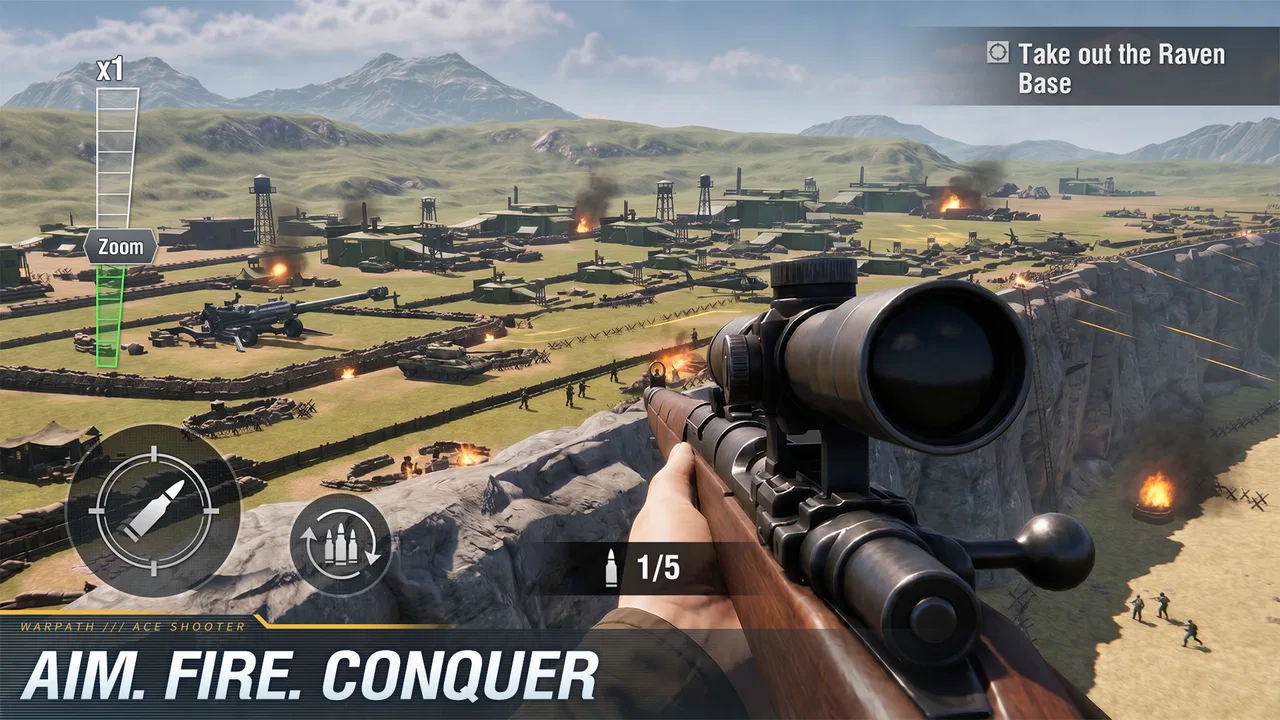
Warpath: Ace Shooter is a strategy-based mobile game available for both Android and iOS platforms. Players are tasked with building and commanding an army, engaging in tactical battles, and conquering territories. With its rich graphics and engaging storyline, the game offers both single-player campaigns and multiplayer modes.
02Is Warpath: Ace Shooter free to play?
Yes, Warpath: Ace Shooter is free to download and play. However, it includes in-app purchases that allow players to buy resources, speed up progress, or acquire exclusive items. While the game can be enjoyed without spending money, some players may choose to make purchases to enhance their experience.
03What are the system requirements for Warpath: Ace Shooter?
For Android users, Warpath: Ace Shooter requires Android 5.0 or later. iOS users need iOS 9.0 or later. The game is optimized for both smartphones and tablets, but ensure that your device has at least 2GB of RAM for smooth gameplay. A stable internet connection is also recommended.
04How does multiplayer work in Warpath: Ace Shooter?
In Warpath: Ace Shooter, multiplayer mode allows players to join alliances, participate in cooperative missions, and compete against other players worldwide. Players can strategize with allies or challenge opponents in real-time battles. This dynamic mode enhances the game's replayability and fosters a community experience.
05Are there any age restrictions for playing Warpath: Ace Shooter?
Warpath: Ace Shooter is rated for players aged 12 and above due to its depiction of war and strategic combat scenarios. Parents should review the game content and in-app purchase options to ensure it aligns with their comfort level for younger players. It's advisable to monitor gameplay and screen time.
Pros
- Engaging WWII storyline with historical accuracy.
- Smooth controls enhance shooting experience.
- Variety of missions keeps gameplay fresh.
- Strategic base-building adds depth.
- High-quality graphics and sound design.
Cons
- Requires a stable internet connection.
- In-app purchases can be expensive.
- Occasional lag on older devices.
- Limited offline play options.
- Energy system restricts playtime.

Warpath: Ace Shooter
Gallery